

The old roads,
end to end.
An empire’s length,
taken a courtyard at a time.
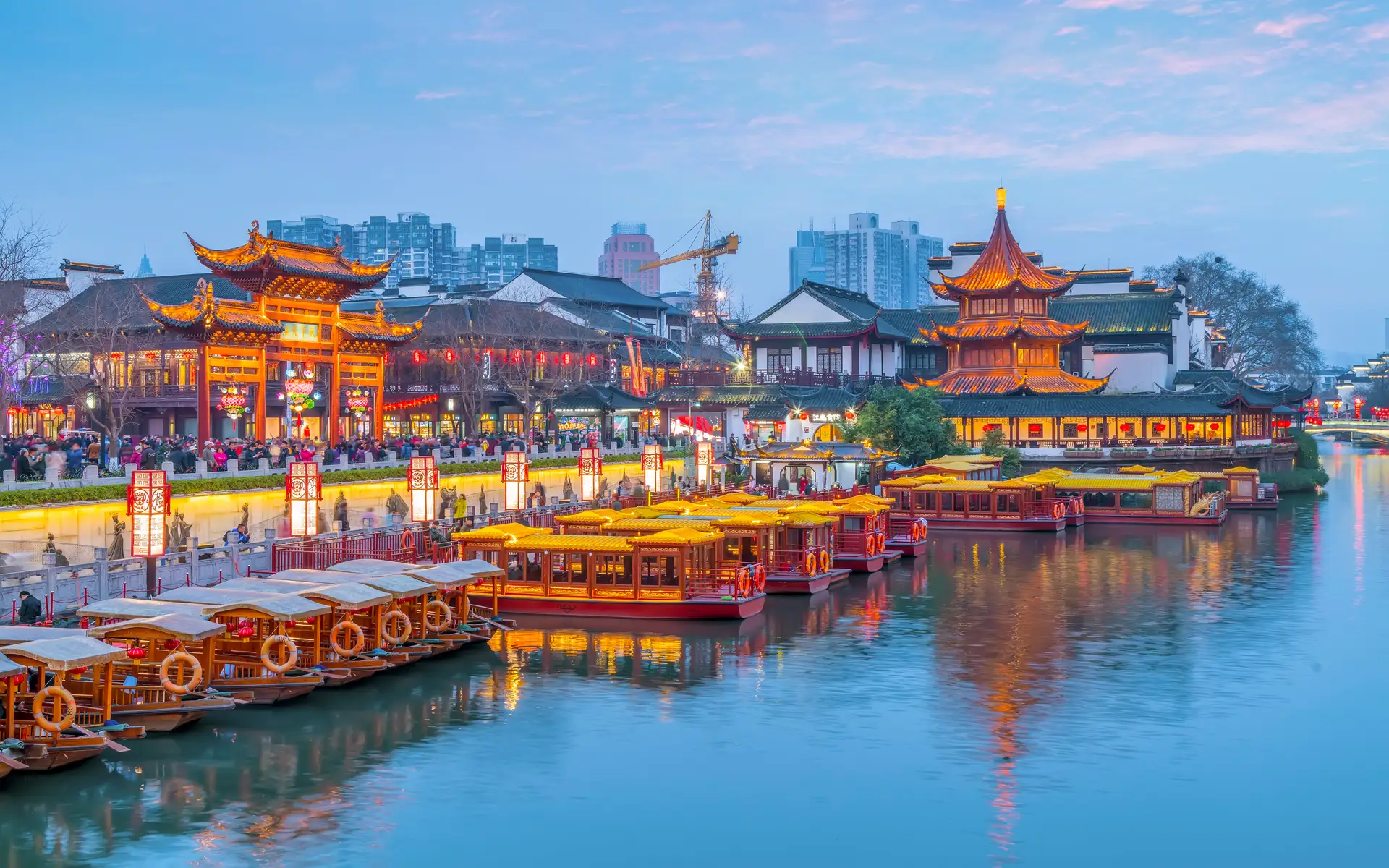
China rewards the patient traveller and overwhelms the rushed one — so we slow it down. A courtyard house in old Beijing rather than a tower; a stretch of wall reached before the buses, where the stone runs off into the hills with no one on it; then south to the karst, where the Li River unspools past fishermen and water buffalo at the pace of a slow boat. You move between them by private rail and car, with a guide who can read a Tang poem off a temple gate and knows which teahouse keeps the good leaves under the counter.
Not a schedule.
A set of mornings worth waking for.
Beijing, behind the walls
A courtyard house down a grey-brick lane, breakfast where the neighbours eat, and the Forbidden City entered the moment the gates open, before the crowds find their stride.
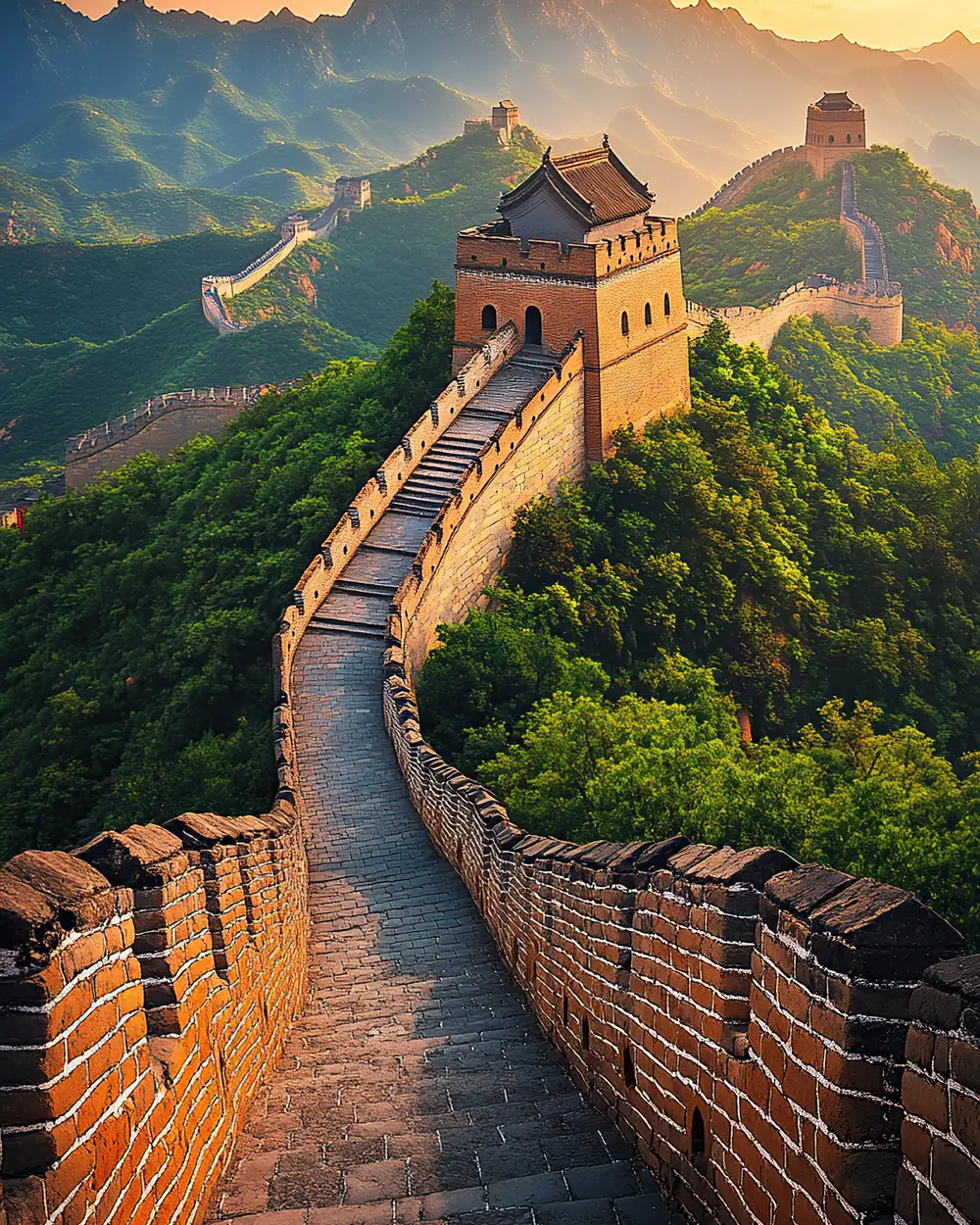
The wall, to yourself
A car before light to an unrestored stretch where the stone climbs into the hills — no cable car, no vendors, just the wall and the morning and the long view back.
Xi’an, and the silent army
The terracotta ranks at a private hour, then the old Muslim quarter at dusk — cumin and charcoal, a city wall you can cycle, lamplight on the lanes.
Chengdu, slow and tea-coloured
A morning with the pandas before the gates open to all, an afternoon that dissolves into a teahouse, and a face-changing opera you’ll fail, happily, to explain afterward.
Onto the Li River
South to Guilin, then a slow boat through the karst — peaks like ink-wash paintings, cormorant fishermen, a lunch cooked on the deck as the river carries you.
Yangshuo, ending light
A last few days among the limestone — a bamboo raft at dawn, a ride through the paddies, and an evening doing nothing but watching the peaks go violet.
“We stood on a stretch of wall that ran off into the hills,
and for an hour, the whole thing was ours.”
A little of what you’ll see.